
Northern Zambia Waterfalls, Big Lakes and Serengeti
34 Day Safari
Day 1:
Meet and greet in Kasane in Botswana and visit:
- Livingstone
- Lusaka
- Kapiri Mposhi
- Dr Livingstone’s Memorial
- Lake Banquela
- Ntumbasushi Waterfalls
- Lumangwe Falls
- Lake Tanganyika
- Kalambo Falls
- Katavi National Park
- Hippo Bay
- Historic monument where Stanley found Dr David Livingstone
- Lake Victoria
- Serengeti National Park
- Ngorogoro Crater
- View of Mount Kilimanjaro
- Mikumi National Park
- Lake Malawi
- Cross border Mozambique
- Cross border Zimbabwe
Livingstone, sometimes known as Maramba, is the capital of the Southern Province of Zambia, a tourism centre for the Victoria Falls lying 10 km (6.2 mi) north of the Zambezi River, it is a border town with road and rail connections to Zimbabwe on the other side of the Victoria Falls. A historic British colonial city, its present population was estimated at 136,897 inhabitants at the 2010 census. It is named after David Livingstone, the British explorer who was the first white man to explore the area.
Lusaka is the capital and largest city of Zambia. One of the fastest-developing cities in Southern Africa, Lusaka is located in the southern part of the central plateau at an elevation of about 1,300 metres (4,265 feet). As of 2010, the city’s population is about 1.7 million. Lusaka is the centre of both commerce and government in Zambia and connects to the country’s four main highways heading north, south, east and west. English is the official language of the city, but Nyanja, and Bemba are also common.
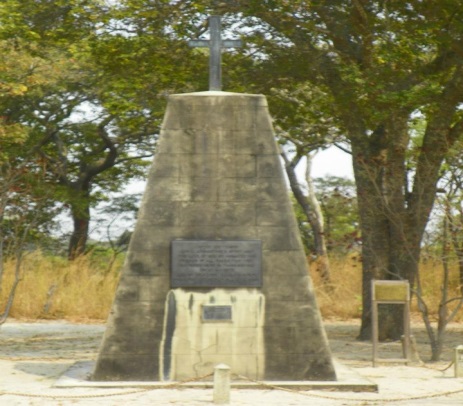
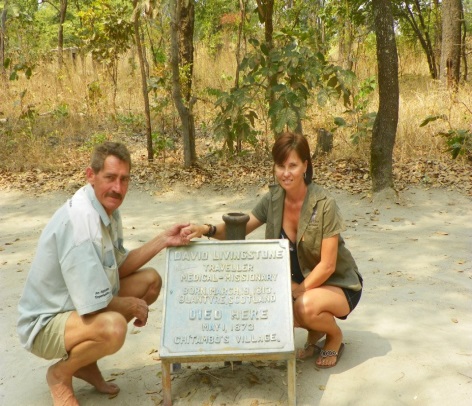
The Livingstone Memorial built in 1902 marks the spot where missionary explorer David Livingstone died on 1 or 4 May 1873 in Chief Chitambo’s village at Ilala near the edge of the Bangweulu Swamps in Zambia. His heart was buried there under a mpundu (also called mvula) tree by his loyal attendants Chuma, Suza Mniasere and Vchopere, before they departed for the coast carrying his body. In their party was an educated African named Jacob Wainwright who carved the inscription “LIVINGSTONE MAY 4 1873” and the names of the attendants on the tree.
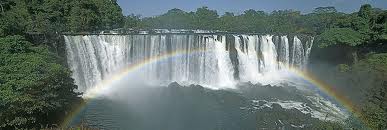
Lumangwe Falls is like a miniature Victoria Falls except this one is no slouch in its own right. It appeared to be roughly 20-30m tall and spanning a width of over 50m. But it had that wide rectangular shape that made this one of the more memorable waterfalls we saw in the remote Northern Zambia.
Lake Tanganyika is an African Great Lake. It is estimated to be the second largest freshwater lake in the world by volume, and the second deepest, in both cases, after only Lake Baikal in Siberia; it is also the world’s longest freshwater lake. The lake is divided among four countries – Tanzania, the Democratic Republic of the Congo, Burundi, and Zambia, with Tanzania (46%) and the DRC (40%) possessing the majority of the lake. The water flows into the Congo River system and ultimately into the Atlantic Ocean.
The Kalambo Falls on the Kalambo River is a 772ft (235m) single drop waterfall in Tanzania, very near the border with Zambia at the southeast end of Lake Tanganyika. The falls are some of the tallest uninterrupted falls in Africa (after South Africa’s Tugela Falls, Ethiopia’s Jin Bahir Falls and some more waterfalls). Downstream of the falls the Kalambo Gorge which has a width of about 1 km and a depth of up to 300 m runs for about 5 km before opening out into the Lake Tanganyika rift valley.

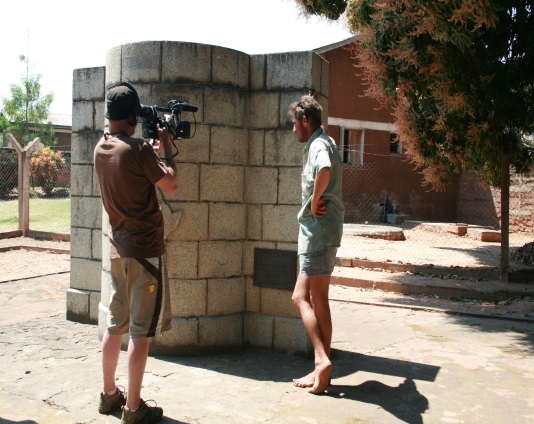
Historic monument where Stanley found Dr David Livingstone.
Lake Victoria (Nam Lolwe in Luo; Victoria Nyanza in Bantu) is one of the African Great Lakes. The lake was named after Queen Victoria of the United Kingdom, by John Hanning Speke, the first European to discover this lake.With a surface area of 68,800 square kilometres (26,600 sq mi), Lake Victoria is Africa’s largest lake by area, and it is the largest tropical lake in the world. Lake Victoria is the world’s 2nd largest freshwater lake by surface area; only Lake Superior in North America is larger. In terms of its volume, Lake Victoria is the world’s ninth largest continental lake, and it contains about 2,750 cubic kilometers (2.2 billion acre-feet) of water.
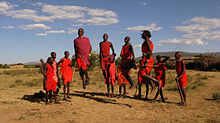
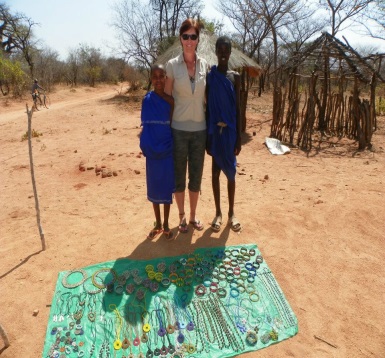
The Maasai (sometimes spelled “Masai” or “Masaai”) are a Nilotic ethnic group of semi-nomadic people located in Kenya and northern Tanzania. The Maasai are among the best known of African ethnic groups, due to their residence near the many game parks of East Africa, and their distinctive customs and dress. They speak Maa (ɔl Maa), a member of the Nilo-Saharan language family that is related to Dinka and Nuer, and are also educated in the official languages of Kenya and Tanzania: Swahili and English. The Maasai population has been reported as numbering 841,622 in Kenya in the 2009 census, compared to 377,089 in the 1989 census.
The Serengeti National Park is a Tanzanian national park in the Serengeti ecosystem in Mara Region. It is famous for its annual migration of over 1.5 million white bearded (or brindled) wildebeest and 250,000 zebra and for its numerous Nile crocodile.
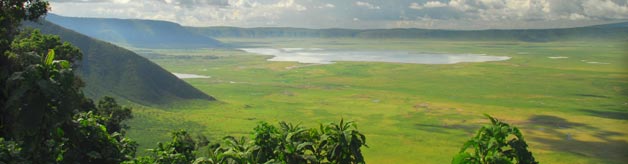
The Ngorongoro Conservation Area (NCA) is a conservation area and a UNESCO World Heritage Site located 180 km (110 mi) west ofArusha in the Crater Highlands area of Tanzania. Ngorongoro Crater, a large volcanic caldera within the area, is recognized by one private organization as one of the seven natural wonders of Africa.[3] The conservation area is administered by the Ngorongoro Conservation Area Authority, an arm of the Tanzanian government, and its boundaries follow the boundary of the Ngorongoro Division of the Arusha Region.
Lake Malawi (Lake Nyasa, or Lago Niassa in Mozambique), is an African Great Lake and the southernmost lake in the East African Rift system, located between Malawi, Mozambique and Tanzania. The third largest and second deepest lake in Africa, it is also the ninth largest in the world. It is reportedly the habitat of more species of fish than any other body of freshwater, including more than 1000 species of cichlids, and was officially declared a reserve by the Government of Mozambique on June 10, 2011.
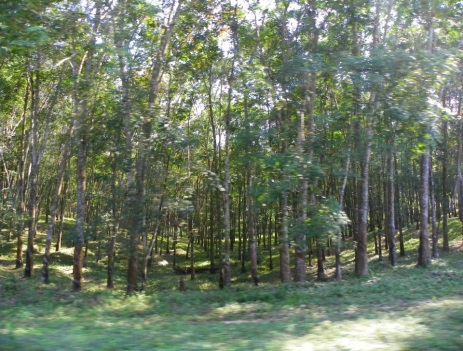
Rubber trees
Day 34: From Zimbabwe into Botswana back to South Africa
PLEASE NOTE THE FOLLOWING INFORMATION:
To ensure a smooth and enjoyable safari experience, we kindly request potential travelers to allocate an additional 4 days for any unforeseen circumstances that may arise. Factors such as road conditions, border posts, and fuel availability are not guaranteed, and it is our aim to provide a relaxed safari rather than a hurried journey from one campsite to another. If the majority of the group wishes to extend our stay at a particular location, we are flexible to accommodate this preference.
It is important to note that our approach does not focus on covering a specific number of kilometers per day. Typically, we commence breaking up camp and leave the campsite between 08:00 and 08:30 in the morning, with the aim of setting up the next campsite no later than 16:00.
- The total distance covered during the safari is approximately 9,500 kilometers.
- For travelers visiting Tanzania, it is mandatory to possess a yellow fever card, which can be obtained at an approximate cost of R 700. Additionally, a $US 50 Visa fee is required.
- Please be aware that cross border charges amount to approximately R 4,000, subject to fluctuations in the Rand-US $ exchange rate.
- The current fuel price stands at approximately R 23 per liter.
PLEASE NOTE:
Price includes:
- Guide fees (vehicle and fuel)
- Extra recovery equipment
- All bookings and arrangements
- All camp, concession and transit fees
Price excludes:
- National park fees, camp/lodge fees
- Own vehicle, fuel and camping equipment
- All food and drinks
- Medical evacuation and travel insurance
- Cross border charges
- Visa fees
- All activities
- Anything else not mentioned above
Safaris are based on minimum 4 vehicles / 8 people and maximum 6 vehicles
Email us at touchthewild@gmail.com for trip bookings and detailed information about our trips.
Booking in advance will avoid disappointment!